

Topline: He became South Carolina’s third firing-squad execution this year and one of only six such executions in modern U.S. history.
Published: November 18, 2025 8:00 am ET

Must Read
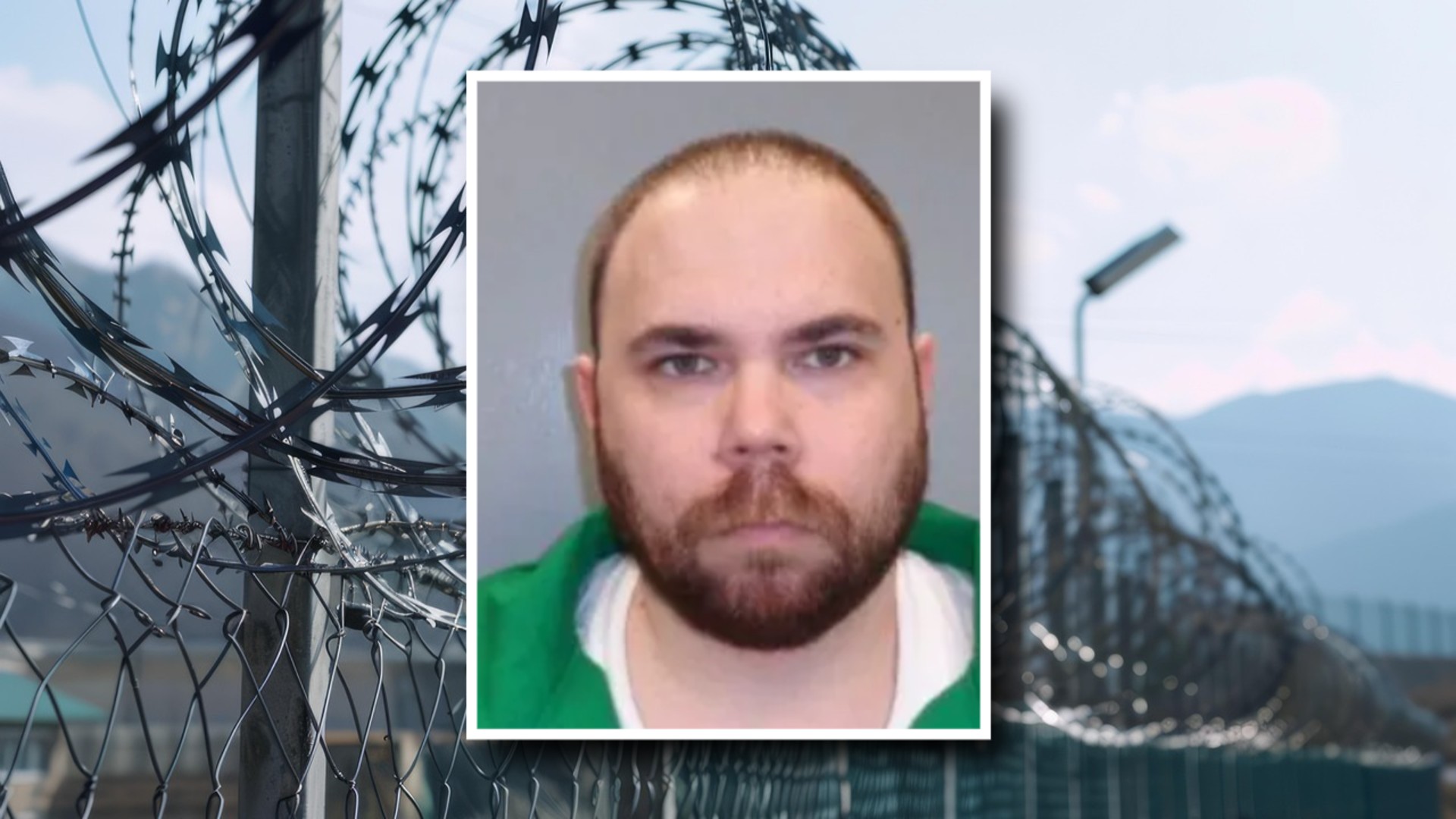
Stephen Bryant (via South Carolina Department of Corrections)
COLUMBIA, SC — South Carolina ended the life of Stephen Corey Bryant on Friday evening, carrying out a firing-squad execution that state officials said was conducted according to established protocol.
According to USA Today, Bryant — who once taunted investigators by writing “catch me if u can” in the blood of 62-year-old Willard “T.J.” Tietjen — was pronounced dead at 6:05 p.m. inside Broad River Correctional Institution.
The execution made him the third inmate shot to death by the state this year and the seventh South Carolinian executed in a span of just 14 months.
The New York Post reported that three prison employees volunteered for the task, each firing a live round from about 15 feet after Bryant, 44, made a brief glance toward 10 witnesses and declined to give any final words.
Witnesses told USA Today that he was already strapped in when the curtain opened; his feet and arms secured, his head bound, and a hood pulled down moments before the shots rang out. The red bullseye — a small target marking his heart — flew off his chest on impact, and blood pooled across his shirt. According to accounts from both outlets, Bryant showed shallow breathing for roughly half a minute and spasmed once before going still as a doctor confirmed his death.
Family members of victims watched from behind glass, holding hands. One Associated Press reporter, quoted by USA Today, said their only visible reaction was a flinch when the rifles fired.
State corrections officials told reporters that Bryant’s last meal included spicy mixed seafood stir-fry, fried fish over rice, egg rolls, stuffed shrimp, two candy bars, German chocolate cake and Pepsi — a detail also noted by the New York Post.
Bryant’s attorneys, as reported by USA Today, had attempted to halt the execution by emphasizing a childhood marked by sexual and physical abuse, prenatal exposure to drugs and alcohol, and long-term brain damage.
Bo King, one of the lawyers, said in a statement after the execution that “Mr. Bryant is the seventh man South Carolina has executed in fourteen months,” adding, “Each was forced to make the barbaric and unconscionable ‘choice’ between bloody, burning, or protracted deaths. Each execution has been brutal and shameful. None has made South Carolina safer or more just.”
In a separate statement reported by the New York Post, King wrote that Bryant “showed grace and courage in forgiving his family and great love for those in and outside of his prison,” saying he would be remembered for “his fierce protectiveness, and his love for nature, the water, and the world.”
Gov. Henry McMaster declined clemency, consistent with what WPDE/WACH noted is a decades-long pattern of South Carolina governors not granting such requests since the death penalty resumed in the U.S. in 1976.
Bryant’s path to the state’s death chamber began with an eight-day killing spree in October 2004, as USA Today, the New York Post, and WPDE/WACH each recount. At the time, he was on probation for burglary. Prosecutors said that he murdered three men and critically wounded a fourth, often by offering rides along rural Sumter County roads and shooting the men when they stepped out to urinate. Two of the victims — Clifton Gainey, 36, and Christopher Burgess, 35 — were shot in the back. Another man, Clinton Brown, 56, survived being left for dead.
The final killing, according to all three outlets, was the execution-style murder of Willard “T.J.” Tietjen on Oct. 11, 2004. USA Today recounts that Bryant shot Tietjen nine times inside his home, burned his eyes with cigarettes, lit candles around the body and scrawled blood-written taunts on the walls, including “Victem 4 in 2 weeks. Catch me if u can.” Bryant also left a bizarre envelope on Tietjen’s chest with a handwritten message: “I am the light. I am so bright. I am the sun. Yours truly, The Prowler,” and another note reading, “Good luck finding me. LMFAO.”
Tietjen’s wife and daughter learned of the murder directly from Bryant, USA Today reported, when he answered the victim’s cellphone. “T.J. is dead,” he told Mildred Tietjen. To Kimberly Dees, he said, “I’m having a wonderful day, how are you?” before telling her that her father had been killed three hours earlier. Dees later testified — as reported by USA Today — that her father had taught her “the value of life. All life has value … We’re all part of God’s creation.” Mildred Tietjen recalled last hearing her husband say, “I love you.”
Bryant pleaded guilty to the killings. He received life sentences in two of the murders and the death penalty for Tietjen’s.
South Carolina’s renewed reliance on the firing squad forms part of a larger shift in execution methods as lethal-injection drugs grow harder to obtain. USA Today noted that only six men in modern U.S. history — including Bryant — have been executed by firing squad. Utah carried out the method three times before 2010, and South Carolina legalized it in 2021 before using it for the first time this year. The New York Post added that the state had paused executions for 13 years before restarting in 2024 — and that the firing squad is still legal in Idaho, Oklahoma, and Mississippi.
According to WPDE/WACH, Bryant’s execution is the state’s seventh this year and its 50th since 1976. Nationally, USA Today reports he is the 43rd person executed in the U.S. in 2025 — a pace not seen since 2012. The next execution on the federal calendar is that of Richard Barry Randolph in Florida, which, if carried out, will mark the 44th execution this year.
Bryant, who once wrote “catch me if u can” in a dead man’s blood, died strapped to a chair as three rifles fired in unison — a scene described by witnesses across USA Today and the New York Post with the clinical detail of a method that most states abandoned generations ago but which South Carolina has revived with startling frequency.
Presumption of Innocence: A presumption of innocence means that any defendant in a criminal trial is presumed to be innocent until they have been proven guilty beyond a reasonable doubt in a court of law. The defendant in this case is only accused of the charges set forth in the criminal complaint. They are innocent until proven guilty.
Editor Picks





Latest Articles




South Carolina Carries Out Firing-Squad Execution of Convicted Killer Stephen Bryant
He became South Carolina’s third firing-squad execution this year and one of only six such executions in modern U.S. history.
By Jacob Charles
Published: November 18, 2025 8:00 am ET
Stephen Bryant (via South Carolina Department of Corrections)
COLUMBIA, SC — South Carolina ended the life of Stephen Corey Bryant on Friday evening, carrying out a firing-squad execution that state officials said was conducted according to established protocol.
According to USA Today, Bryant — who once taunted investigators by writing “catch me if u can” in the blood of 62-year-old Willard “T.J.” Tietjen — was pronounced dead at 6:05 p.m. inside Broad River Correctional Institution.
The execution made him the third inmate shot to death by the state this year and the seventh South Carolinian executed in a span of just 14 months.
The New York Post reported that three prison employees volunteered for the task, each firing a live round from about 15 feet after Bryant, 44, made a brief glance toward 10 witnesses and declined to give any final words.
Witnesses told USA Today that he was already strapped in when the curtain opened; his feet and arms secured, his head bound, and a hood pulled down moments before the shots rang out. The red bullseye — a small target marking his heart — flew off his chest on impact, and blood pooled across his shirt. According to accounts from both outlets, Bryant showed shallow breathing for roughly half a minute and spasmed once before going still as a doctor confirmed his death.
Family members of victims watched from behind glass, holding hands. One Associated Press reporter, quoted by USA Today, said their only visible reaction was a flinch when the rifles fired.
State corrections officials told reporters that Bryant’s last meal included spicy mixed seafood stir-fry, fried fish over rice, egg rolls, stuffed shrimp, two candy bars, German chocolate cake and Pepsi — a detail also noted by the New York Post.
Bryant’s attorneys, as reported by USA Today, had attempted to halt the execution by emphasizing a childhood marked by sexual and physical abuse, prenatal exposure to drugs and alcohol, and long-term brain damage.
Bo King, one of the lawyers, said in a statement after the execution that “Mr. Bryant is the seventh man South Carolina has executed in fourteen months,” adding, “Each was forced to make the barbaric and unconscionable ‘choice’ between bloody, burning, or protracted deaths. Each execution has been brutal and shameful. None has made South Carolina safer or more just.”
In a separate statement reported by the New York Post, King wrote that Bryant “showed grace and courage in forgiving his family and great love for those in and outside of his prison,” saying he would be remembered for “his fierce protectiveness, and his love for nature, the water, and the world.”
Gov. Henry McMaster declined clemency, consistent with what WPDE/WACH noted is a decades-long pattern of South Carolina governors not granting such requests since the death penalty resumed in the U.S. in 1976.
Bryant’s path to the state’s death chamber began with an eight-day killing spree in October 2004, as USA Today, the New York Post, and WPDE/WACH each recount. At the time, he was on probation for burglary. Prosecutors said that he murdered three men and critically wounded a fourth, often by offering rides along rural Sumter County roads and shooting the men when they stepped out to urinate. Two of the victims — Clifton Gainey, 36, and Christopher Burgess, 35 — were shot in the back. Another man, Clinton Brown, 56, survived being left for dead.
The final killing, according to all three outlets, was the execution-style murder of Willard “T.J.” Tietjen on Oct. 11, 2004. USA Today recounts that Bryant shot Tietjen nine times inside his home, burned his eyes with cigarettes, lit candles around the body and scrawled blood-written taunts on the walls, including “Victem 4 in 2 weeks. Catch me if u can.” Bryant also left a bizarre envelope on Tietjen’s chest with a handwritten message: “I am the light. I am so bright. I am the sun. Yours truly, The Prowler,” and another note reading, “Good luck finding me. LMFAO.”
Tietjen’s wife and daughter learned of the murder directly from Bryant, USA Today reported, when he answered the victim’s cellphone. “T.J. is dead,” he told Mildred Tietjen. To Kimberly Dees, he said, “I’m having a wonderful day, how are you?” before telling her that her father had been killed three hours earlier. Dees later testified — as reported by USA Today — that her father had taught her “the value of life. All life has value … We’re all part of God’s creation.” Mildred Tietjen recalled last hearing her husband say, “I love you.”
Bryant pleaded guilty to the killings. He received life sentences in two of the murders and the death penalty for Tietjen’s.
South Carolina’s renewed reliance on the firing squad forms part of a larger shift in execution methods as lethal-injection drugs grow harder to obtain. USA Today noted that only six men in modern U.S. history — including Bryant — have been executed by firing squad. Utah carried out the method three times before 2010, and South Carolina legalized it in 2021 before using it for the first time this year. The New York Post added that the state had paused executions for 13 years before restarting in 2024 — and that the firing squad is still legal in Idaho, Oklahoma, and Mississippi.
According to WPDE/WACH, Bryant’s execution is the state’s seventh this year and its 50th since 1976. Nationally, USA Today reports he is the 43rd person executed in the U.S. in 2025 — a pace not seen since 2012. The next execution on the federal calendar is that of Richard Barry Randolph in Florida, which, if carried out, will mark the 44th execution this year.
Bryant, who once wrote “catch me if u can” in a dead man’s blood, died strapped to a chair as three rifles fired in unison — a scene described by witnesses across USA Today and the New York Post with the clinical detail of a method that most states abandoned generations ago but which South Carolina has revived with startling frequency.
Presumption of Innocence: A presumption of innocence means that any defendant in a criminal trial is presumed to be innocent until they have been proven guilty beyond a reasonable doubt in a court of law. The defendant in this case is only accused of the charges set forth in the criminal complaint. They are innocent until proven guilty.
Editor's Note: ThePo makes every effort to accurately transcribe the contents of affidavits of probable cause contained in criminal complaints. Often, the complaints themselves are copies of copies of faxed copies, and are difficult to read. To confirm the accuracy of our transcription, contact the Magisterial District Court listed above and request a copy of the criminal complaint. It's a public record to which you are entitled.
Must Read
Editor Picks
Latest Articles
South Carolina Carries Out Firing-Squad Execution of Convicted Killer Stephen Bryant
He became South Carolina’s third firing-squad execution this year and one of only six such executions in modern U.S. history.
By Jacob Charles
Published: November 18, 2025 8:00 am ET
Stephen Bryant (via South Carolina Department of Corrections)
COLUMBIA, SC — South Carolina ended the life of Stephen Corey Bryant on Friday evening, carrying out a firing-squad execution that state officials said was conducted according to established protocol.
According to USA Today, Bryant — who once taunted investigators by writing “catch me if u can” in the blood of 62-year-old Willard “T.J.” Tietjen — was pronounced dead at 6:05 p.m. inside Broad River Correctional Institution.
The execution made him the third inmate shot to death by the state this year and the seventh South Carolinian executed in a span of just 14 months.
The New York Post reported that three prison employees volunteered for the task, each firing a live round from about 15 feet after Bryant, 44, made a brief glance toward 10 witnesses and declined to give any final words.
Witnesses told USA Today that he was already strapped in when the curtain opened; his feet and arms secured, his head bound, and a hood pulled down moments before the shots rang out. The red bullseye — a small target marking his heart — flew off his chest on impact, and blood pooled across his shirt. According to accounts from both outlets, Bryant showed shallow breathing for roughly half a minute and spasmed once before going still as a doctor confirmed his death.
Family members of victims watched from behind glass, holding hands. One Associated Press reporter, quoted by USA Today, said their only visible reaction was a flinch when the rifles fired.
State corrections officials told reporters that Bryant’s last meal included spicy mixed seafood stir-fry, fried fish over rice, egg rolls, stuffed shrimp, two candy bars, German chocolate cake and Pepsi — a detail also noted by the New York Post.
Bryant’s attorneys, as reported by USA Today, had attempted to halt the execution by emphasizing a childhood marked by sexual and physical abuse, prenatal exposure to drugs and alcohol, and long-term brain damage.
Bo King, one of the lawyers, said in a statement after the execution that “Mr. Bryant is the seventh man South Carolina has executed in fourteen months,” adding, “Each was forced to make the barbaric and unconscionable ‘choice’ between bloody, burning, or protracted deaths. Each execution has been brutal and shameful. None has made South Carolina safer or more just.”
In a separate statement reported by the New York Post, King wrote that Bryant “showed grace and courage in forgiving his family and great love for those in and outside of his prison,” saying he would be remembered for “his fierce protectiveness, and his love for nature, the water, and the world.”
Gov. Henry McMaster declined clemency, consistent with what WPDE/WACH noted is a decades-long pattern of South Carolina governors not granting such requests since the death penalty resumed in the U.S. in 1976.
Bryant’s path to the state’s death chamber began with an eight-day killing spree in October 2004, as USA Today, the New York Post, and WPDE/WACH each recount. At the time, he was on probation for burglary. Prosecutors said that he murdered three men and critically wounded a fourth, often by offering rides along rural Sumter County roads and shooting the men when they stepped out to urinate. Two of the victims — Clifton Gainey, 36, and Christopher Burgess, 35 — were shot in the back. Another man, Clinton Brown, 56, survived being left for dead.
The final killing, according to all three outlets, was the execution-style murder of Willard “T.J.” Tietjen on Oct. 11, 2004. USA Today recounts that Bryant shot Tietjen nine times inside his home, burned his eyes with cigarettes, lit candles around the body and scrawled blood-written taunts on the walls, including “Victem 4 in 2 weeks. Catch me if u can.” Bryant also left a bizarre envelope on Tietjen’s chest with a handwritten message: “I am the light. I am so bright. I am the sun. Yours truly, The Prowler,” and another note reading, “Good luck finding me. LMFAO.”
Tietjen’s wife and daughter learned of the murder directly from Bryant, USA Today reported, when he answered the victim’s cellphone. “T.J. is dead,” he told Mildred Tietjen. To Kimberly Dees, he said, “I’m having a wonderful day, how are you?” before telling her that her father had been killed three hours earlier. Dees later testified — as reported by USA Today — that her father had taught her “the value of life. All life has value … We’re all part of God’s creation.” Mildred Tietjen recalled last hearing her husband say, “I love you.”
Bryant pleaded guilty to the killings. He received life sentences in two of the murders and the death penalty for Tietjen’s.
South Carolina’s renewed reliance on the firing squad forms part of a larger shift in execution methods as lethal-injection drugs grow harder to obtain. USA Today noted that only six men in modern U.S. history — including Bryant — have been executed by firing squad. Utah carried out the method three times before 2010, and South Carolina legalized it in 2021 before using it for the first time this year. The New York Post added that the state had paused executions for 13 years before restarting in 2024 — and that the firing squad is still legal in Idaho, Oklahoma, and Mississippi.
According to WPDE/WACH, Bryant’s execution is the state’s seventh this year and its 50th since 1976. Nationally, USA Today reports he is the 43rd person executed in the U.S. in 2025 — a pace not seen since 2012. The next execution on the federal calendar is that of Richard Barry Randolph in Florida, which, if carried out, will mark the 44th execution this year.
Bryant, who once wrote “catch me if u can” in a dead man’s blood, died strapped to a chair as three rifles fired in unison — a scene described by witnesses across USA Today and the New York Post with the clinical detail of a method that most states abandoned generations ago but which South Carolina has revived with startling frequency.
Presumption of Innocence: A presumption of innocence means that any defendant in a criminal trial is presumed to be innocent until they have been proven guilty beyond a reasonable doubt in a court of law. The defendant in this case is only accused of the charges set forth in the criminal complaint. They are innocent until proven guilty.
Editor's Note: ThePo makes every effort to accurately transcribe the contents of affidavits of probable cause contained in criminal complaints. Often, the complaints themselves are copies of copies of faxed copies, and are difficult to read. To confirm the accuracy of our transcription, contact the Magisterial District Court listed above and request a copy of the criminal complaint. It's a public record to which you are entitled.
Must Read
