

Topline: Three decades after Tupac Shakur’s killing, the only person convicted in his death received 40 years to life as the rapper’s family described years of grief.
Published: October 14, 2026 4:04 pm ET
Shawn Fletcher
Committed to the craft of journalism and am driven by my desire to inform and inspire.
Must Read
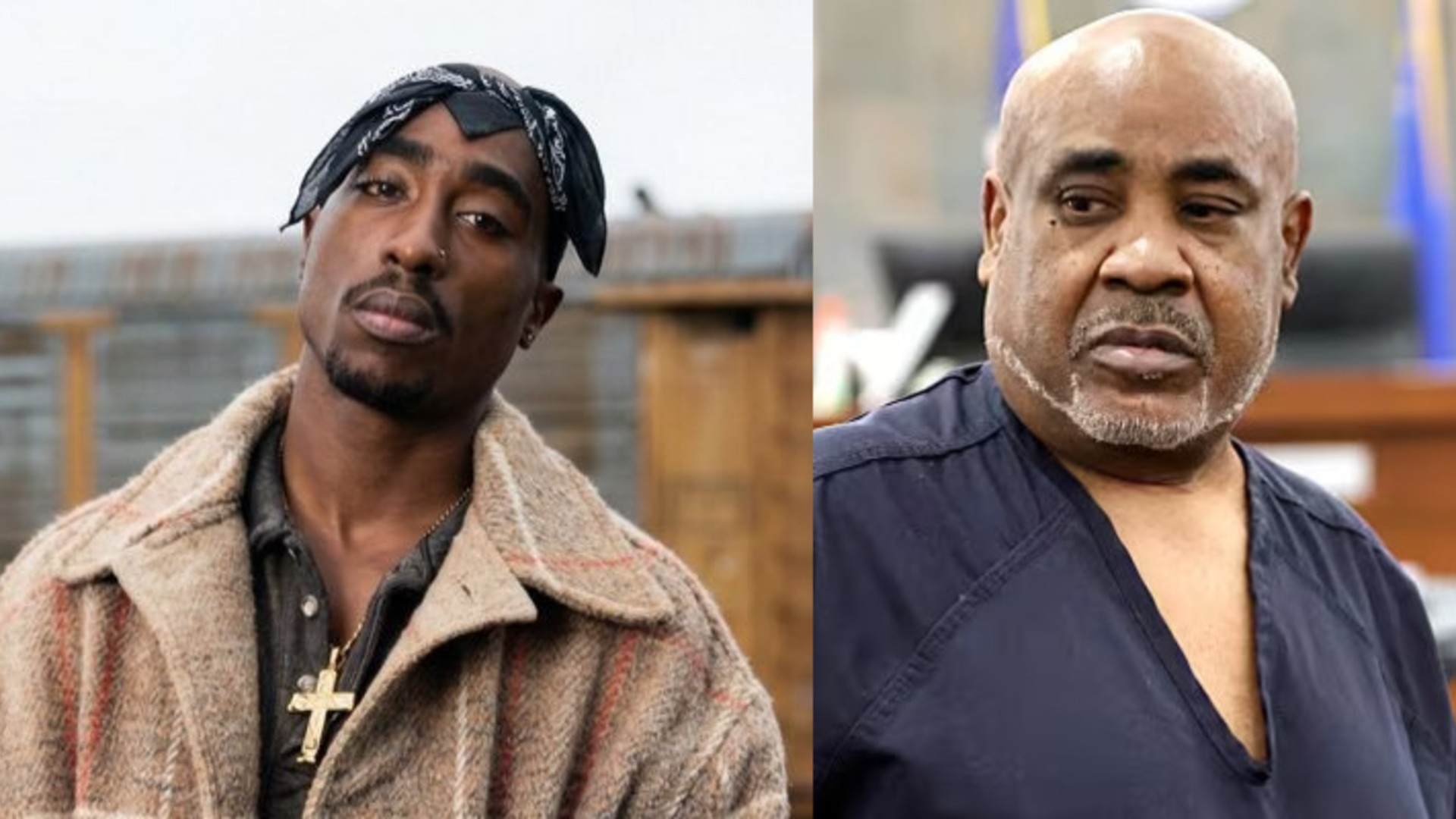
Tupac Shakur, left, and Duane “Keffe D” Davis
LAS VEGAS, NV — Duane “Keffe D” Davis was sentenced Tuesday, Oct. 13, to 40 years to life in prison for orchestrating the 1996 murder of Tupac Shakur, bringing a prison sentence in a killing that went uncharged for decades.
Davis, 63, was convicted in August of first-degree murder with a deadly weapon, according to Associated Press reporting published by News4JAX. He remains the only person charged and convicted in the rapper’s death. His attorney, Michael Sanft, said he plans to appeal, arguing prosecutors waited too long to bring the case.
Judge Carli Kierny imposed 20 years to life for murder and a consecutive 20 years to life for the deadly-weapon enhancement, with 731 days of credit for time served, 8NewsNow reported. The AP sentencing alert carried by WHDH also confirmed the total sentence, updating earlier preview material on that page.
Family Describes Decades of Loss
Shakur’s siblings, Maurice “Mopreme” Shakur and Sekyiwa “Set” Shakur, spoke at sentencing. Sekyiwa described years of grief and mental-health struggles after her brother’s death, telling the court he had ambitions to improve life for his community.
After the August verdict, family members embraced prosecutors, and Sekyiwa cried. The family later thanked jurors and advocates and pledged to preserve Shakur’s legacy.
Prosecutor Marc DiGiacomo argued Tuesday that Davis deserved the maximum sentence because he had tried to profit from the killing. After the verdict, prosecutor Binu Palal had described the family’s experience of hearing Davis boast for years about killing their loved one.
Davis briefly addressed Kierny to request the return of property police had taken from his home, including photographs. Asked whether he wanted to say anything else, he declined.
The Shooting and the Evidence
Shakur, 25, was riding in the passenger seat of a black BMW with music executive Marion “Suge” Knight on Sept. 7, 1996, when a white Cadillac approached at a red light near the Las Vegas Strip. Shakur suffered multiple gunshot wounds and died Sept. 13. Knight survived.
Davis, a former South Side Compton Crips leader, described his involvement in interviews and a 2019 memoir. In his account, Shakur and members of his entourage had beaten Davis’ nephew, Orlando “Baby Lane” Anderson, hours earlier. Davis said he sought retaliation, rode in the Cadillac’s front passenger seat and handed a gun to someone in the back, where the shots originated.
Prosecutors used Davis’ statements to detectives and documentary filmmakers to argue that he organized the attack and supplied the weapon. They linked the killing to conflict between the South Side Compton Crips and Mob Piru. Davis had previously avoided prosecution under an agreement with law enforcement.
The defense challenged the absence of physical evidence tying Davis to the shooting and argued he fabricated accounts to make money. According to 8NewsNow, closing arguments also raised claims of police corruption and challenged whether a former attorney had protected Davis’ interests.
AP reported nine days of testimony and approximately three hours of jury deliberations before the Aug. 31 conviction. The local report described a shorter trial and deliberations of less than three hours. It also included a Sept. 6 reference to the shooting, although its main chronology and AP’s account identify Sept. 7.
No Additional Charges Announced
The three other alleged Cadillac occupants have died, including Anderson, whom Davis identified as the gunman.
Sean “Diddy” Combs also figured in trial testimony. Witnesses said he used South Side Compton Crips members as security for Bad Boy Records. Davis alleged in his book and public statements that Combs offered money to kill Shakur and Knight. Combs has repeatedly denied involvement. AP reported that he is serving a separate four-year sentence for prostitution-related offenses.
Shakur’s death came during a flourishing recording and acting career. His music, addressing hardship, love and Black life, has continued to reach listeners in the decades since.
Clark County District Attorney Steve Wolfson said after the verdict that prosecutors lacked sufficient evidence to charge anyone else. He left open the possibility of additional charges if new evidence emerges.
Presumption of Innocence: A presumption of innocence means that any defendant in a criminal trial is presumed to be innocent until they have been proven guilty beyond a reasonable doubt in a court of law. The defendant in this case is only accused of the charges set forth in the criminal complaint. They are innocent until proven guilty.
Editor Picks





Latest Articles



Duane ‘Keffe D’ Davis Gets 40 Years to Life for Orchestrating Tupac Shakur’s Murder
Three decades after Tupac Shakur’s killing, the only person convicted in his death received 40 years to life as the rapper’s family described years of grief.
By Shawn Fletcher
Published: October 14, 2026 4:04 pm ET
Tupac Shakur, left, and Duane “Keffe D” Davis
LAS VEGAS, NV — Duane “Keffe D” Davis was sentenced Tuesday, Oct. 13, to 40 years to life in prison for orchestrating the 1996 murder of Tupac Shakur, bringing a prison sentence in a killing that went uncharged for decades.
Davis, 63, was convicted in August of first-degree murder with a deadly weapon, according to Associated Press reporting published by News4JAX. He remains the only person charged and convicted in the rapper’s death. His attorney, Michael Sanft, said he plans to appeal, arguing prosecutors waited too long to bring the case.
Judge Carli Kierny imposed 20 years to life for murder and a consecutive 20 years to life for the deadly-weapon enhancement, with 731 days of credit for time served, 8NewsNow reported. The AP sentencing alert carried by WHDH also confirmed the total sentence, updating earlier preview material on that page.
Family Describes Decades of Loss
Shakur’s siblings, Maurice “Mopreme” Shakur and Sekyiwa “Set” Shakur, spoke at sentencing. Sekyiwa described years of grief and mental-health struggles after her brother’s death, telling the court he had ambitions to improve life for his community.
After the August verdict, family members embraced prosecutors, and Sekyiwa cried. The family later thanked jurors and advocates and pledged to preserve Shakur’s legacy.
Prosecutor Marc DiGiacomo argued Tuesday that Davis deserved the maximum sentence because he had tried to profit from the killing. After the verdict, prosecutor Binu Palal had described the family’s experience of hearing Davis boast for years about killing their loved one.
Davis briefly addressed Kierny to request the return of property police had taken from his home, including photographs. Asked whether he wanted to say anything else, he declined.
The Shooting and the Evidence
Shakur, 25, was riding in the passenger seat of a black BMW with music executive Marion “Suge” Knight on Sept. 7, 1996, when a white Cadillac approached at a red light near the Las Vegas Strip. Shakur suffered multiple gunshot wounds and died Sept. 13. Knight survived.
Davis, a former South Side Compton Crips leader, described his involvement in interviews and a 2019 memoir. In his account, Shakur and members of his entourage had beaten Davis’ nephew, Orlando “Baby Lane” Anderson, hours earlier. Davis said he sought retaliation, rode in the Cadillac’s front passenger seat and handed a gun to someone in the back, where the shots originated.
Prosecutors used Davis’ statements to detectives and documentary filmmakers to argue that he organized the attack and supplied the weapon. They linked the killing to conflict between the South Side Compton Crips and Mob Piru. Davis had previously avoided prosecution under an agreement with law enforcement.
The defense challenged the absence of physical evidence tying Davis to the shooting and argued he fabricated accounts to make money. According to 8NewsNow, closing arguments also raised claims of police corruption and challenged whether a former attorney had protected Davis’ interests.
AP reported nine days of testimony and approximately three hours of jury deliberations before the Aug. 31 conviction. The local report described a shorter trial and deliberations of less than three hours. It also included a Sept. 6 reference to the shooting, although its main chronology and AP’s account identify Sept. 7.
No Additional Charges Announced
The three other alleged Cadillac occupants have died, including Anderson, whom Davis identified as the gunman.
Sean “Diddy” Combs also figured in trial testimony. Witnesses said he used South Side Compton Crips members as security for Bad Boy Records. Davis alleged in his book and public statements that Combs offered money to kill Shakur and Knight. Combs has repeatedly denied involvement. AP reported that he is serving a separate four-year sentence for prostitution-related offenses.
Shakur’s death came during a flourishing recording and acting career. His music, addressing hardship, love and Black life, has continued to reach listeners in the decades since.
Clark County District Attorney Steve Wolfson said after the verdict that prosecutors lacked sufficient evidence to charge anyone else. He left open the possibility of additional charges if new evidence emerges.
Presumption of Innocence: A presumption of innocence means that any defendant in a criminal trial is presumed to be innocent until they have been proven guilty beyond a reasonable doubt in a court of law. The defendant in this case is only accused of the charges set forth in the criminal complaint. They are innocent until proven guilty.
Editor's Note: ThePo makes every effort to accurately transcribe the contents of affidavits of probable cause contained in criminal complaints. Often, the complaints themselves are copies of copies of faxed copies, and are difficult to read. To confirm the accuracy of our transcription, contact the Magisterial District Court listed above and request a copy of the criminal complaint. It's a public record to which you are entitled.
Must Read
Editor Picks
Latest Articles
Duane ‘Keffe D’ Davis Gets 40 Years to Life for Orchestrating Tupac Shakur’s Murder
Three decades after Tupac Shakur’s killing, the only person convicted in his death received 40 years to life as the rapper’s family described years of grief.
By Shawn Fletcher
Published: October 14, 2026 4:04 pm ET
Tupac Shakur, left, and Duane “Keffe D” Davis
LAS VEGAS, NV — Duane “Keffe D” Davis was sentenced Tuesday, Oct. 13, to 40 years to life in prison for orchestrating the 1996 murder of Tupac Shakur, bringing a prison sentence in a killing that went uncharged for decades.
Davis, 63, was convicted in August of first-degree murder with a deadly weapon, according to Associated Press reporting published by News4JAX. He remains the only person charged and convicted in the rapper’s death. His attorney, Michael Sanft, said he plans to appeal, arguing prosecutors waited too long to bring the case.
Judge Carli Kierny imposed 20 years to life for murder and a consecutive 20 years to life for the deadly-weapon enhancement, with 731 days of credit for time served, 8NewsNow reported. The AP sentencing alert carried by WHDH also confirmed the total sentence, updating earlier preview material on that page.
Family Describes Decades of Loss
Shakur’s siblings, Maurice “Mopreme” Shakur and Sekyiwa “Set” Shakur, spoke at sentencing. Sekyiwa described years of grief and mental-health struggles after her brother’s death, telling the court he had ambitions to improve life for his community.
After the August verdict, family members embraced prosecutors, and Sekyiwa cried. The family later thanked jurors and advocates and pledged to preserve Shakur’s legacy.
Prosecutor Marc DiGiacomo argued Tuesday that Davis deserved the maximum sentence because he had tried to profit from the killing. After the verdict, prosecutor Binu Palal had described the family’s experience of hearing Davis boast for years about killing their loved one.
Davis briefly addressed Kierny to request the return of property police had taken from his home, including photographs. Asked whether he wanted to say anything else, he declined.
The Shooting and the Evidence
Shakur, 25, was riding in the passenger seat of a black BMW with music executive Marion “Suge” Knight on Sept. 7, 1996, when a white Cadillac approached at a red light near the Las Vegas Strip. Shakur suffered multiple gunshot wounds and died Sept. 13. Knight survived.
Davis, a former South Side Compton Crips leader, described his involvement in interviews and a 2019 memoir. In his account, Shakur and members of his entourage had beaten Davis’ nephew, Orlando “Baby Lane” Anderson, hours earlier. Davis said he sought retaliation, rode in the Cadillac’s front passenger seat and handed a gun to someone in the back, where the shots originated.
Prosecutors used Davis’ statements to detectives and documentary filmmakers to argue that he organized the attack and supplied the weapon. They linked the killing to conflict between the South Side Compton Crips and Mob Piru. Davis had previously avoided prosecution under an agreement with law enforcement.
The defense challenged the absence of physical evidence tying Davis to the shooting and argued he fabricated accounts to make money. According to 8NewsNow, closing arguments also raised claims of police corruption and challenged whether a former attorney had protected Davis’ interests.
AP reported nine days of testimony and approximately three hours of jury deliberations before the Aug. 31 conviction. The local report described a shorter trial and deliberations of less than three hours. It also included a Sept. 6 reference to the shooting, although its main chronology and AP’s account identify Sept. 7.
No Additional Charges Announced
The three other alleged Cadillac occupants have died, including Anderson, whom Davis identified as the gunman.
Sean “Diddy” Combs also figured in trial testimony. Witnesses said he used South Side Compton Crips members as security for Bad Boy Records. Davis alleged in his book and public statements that Combs offered money to kill Shakur and Knight. Combs has repeatedly denied involvement. AP reported that he is serving a separate four-year sentence for prostitution-related offenses.
Shakur’s death came during a flourishing recording and acting career. His music, addressing hardship, love and Black life, has continued to reach listeners in the decades since.
Clark County District Attorney Steve Wolfson said after the verdict that prosecutors lacked sufficient evidence to charge anyone else. He left open the possibility of additional charges if new evidence emerges.
Presumption of Innocence: A presumption of innocence means that any defendant in a criminal trial is presumed to be innocent until they have been proven guilty beyond a reasonable doubt in a court of law. The defendant in this case is only accused of the charges set forth in the criminal complaint. They are innocent until proven guilty.
Editor's Note: ThePo makes every effort to accurately transcribe the contents of affidavits of probable cause contained in criminal complaints. Often, the complaints themselves are copies of copies of faxed copies, and are difficult to read. To confirm the accuracy of our transcription, contact the Magisterial District Court listed above and request a copy of the criminal complaint. It's a public record to which you are entitled.
Must Read
