

Topline: A single blood sample preserved from a 1983 crime scene became the key to solving Dorothy Tate’s murder, after advances in DNA genealogy analysis connected it to two suspects more than four decades later.
Published: January 22, 2026 7:56 am ET

Must Read
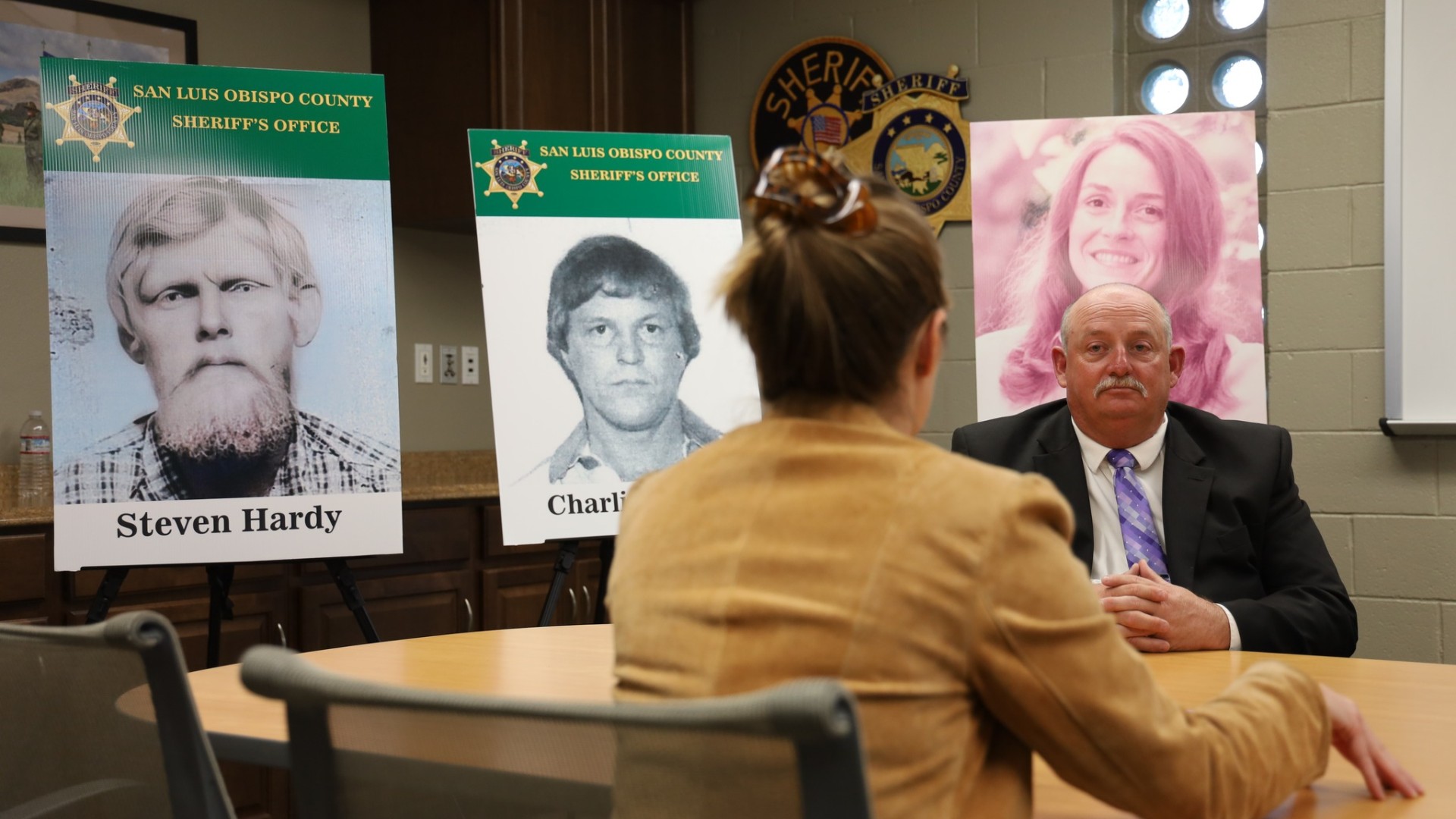
Detective Clint Cole giving an interview to announce the solving of the case of Dorthy "Toby" Tate's 1983 murder. (via San Luis Obispo County Sheriff’s Office)
SAN LUIS OBISPO, CA — More than four decades after Dorothy “Toby” Tate was found shot to death in a van along Highway 1, investigators say advances in forensic science have finally brought answers to a case that long haunted her family and local law enforcement.
According to the San Luis Obispo County Sheriff’s Office, Tate’s body was discovered on Nov. 15, 1983, inside a van parked at a turnout roughly three miles north of Hearst Castle. Deputies responding to a report of a suspicious vehicle found that she had been fatally shot. At the time, detectives were unable to identify any suspects, and the homicide languished as a cold case for decades.
That changed after Cold Case/Unsolved Homicide Detective Clint Cole reopened the investigation and conducted an exhaustive review of original reports, physical evidence and forensic material, the sheriff’s office said. Using modern techniques unavailable in the 1980s, including advanced DNA genealogy analysis, investigators reexamined blood evidence recovered from the crime scene.
The sheriff’s office said the blood sample was submitted for forensic genealogy testing, which identified Steven Richard Hardy as a contributor. That finding was later confirmed through DNA comparison with a close family member. Investigators also revisited fingerprint evidence collected in 1983, determining that prints recovered from a Coca-Cola can left at the scene belonged to Charley Sneed, according to authorities.
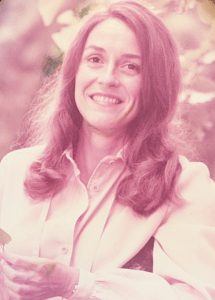
Dorothy “Toby” Tate (via San Luis Obispo County Sheriff’s Office)
The case was reviewed by the San Luis Obispo County District Attorney’s Office, which confirmed that sufficient probable cause existed to support prosecution had the suspects been alive, according to the sheriff’s office. With that review complete, the homicide has been officially closed as “exceptionally cleared.”
“This case demonstrates the power of modern forensic science and the commitment of Detective Cole, who never stopped working to bring justice to victims and their families,” Sheriff Ian Parkinson said in a statement.
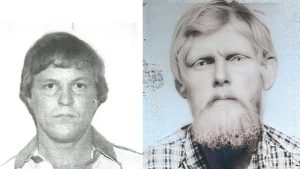
Charley Sneed, left, and Steven Richard Hardy (via San Luis Obispo County Sheriff’s Office)
For Tate’s family, the announcement marked the end of a long search for answers. Priscilla Tate, Dorothy Tate’s sister, told The Tribune that the resolution brought a sense of closure after decades of uncertainty. “I can say they put an end to this,” she said. “We buried her, and she’s proud of it. She’s proud of us for doing this work.”
Investigators credited a wide range of partners for their work on the case, including Parabon Nanolabs and chief genetic genealogist CeCe Moore, Othram Labs, Shelby Liddell with the Sheriff’s Crime Lab, and Dominick Rostenberg of the Phoenix Police Department.
“This will be considered a closed, solved homicide with deceased suspects,” Cole said, according to The Tribune. “It’s just extremely rewarding to give the family some closure.”
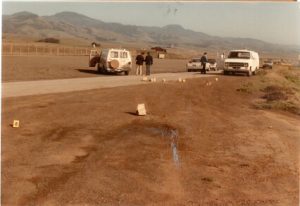
Crime scene photo released by investigators of the case of Dorthy “Toby” Tate’s 1983 murder.
Presumption of Innocence: A presumption of innocence means that any defendant in a criminal trial is presumed to be innocent until they have been proven guilty beyond a reasonable doubt in a court of law. The defendant in this case is only accused of the charges set forth in the criminal complaint. They are innocent until proven guilty.
Editor Picks





Latest Articles




Advances in DNA Technology Solve 1983 Killing of Dorothy “Toby” Tate
A single blood sample preserved from a 1983 crime scene became the key to solving Dorothy Tate’s murder, after advances in DNA genealogy analysis connected it to two suspects more than four decades later.
By Jacob Charles
Published: January 22, 2026 7:56 am ET
Detective Clint Cole giving an interview to announce the solving of the case of Dorthy "Toby" Tate's 1983 murder. (via San Luis Obispo County Sheriff’s Office)
SAN LUIS OBISPO, CA — More than four decades after Dorothy “Toby” Tate was found shot to death in a van along Highway 1, investigators say advances in forensic science have finally brought answers to a case that long haunted her family and local law enforcement.
According to the San Luis Obispo County Sheriff’s Office, Tate’s body was discovered on Nov. 15, 1983, inside a van parked at a turnout roughly three miles north of Hearst Castle. Deputies responding to a report of a suspicious vehicle found that she had been fatally shot. At the time, detectives were unable to identify any suspects, and the homicide languished as a cold case for decades.
That changed after Cold Case/Unsolved Homicide Detective Clint Cole reopened the investigation and conducted an exhaustive review of original reports, physical evidence and forensic material, the sheriff’s office said. Using modern techniques unavailable in the 1980s, including advanced DNA genealogy analysis, investigators reexamined blood evidence recovered from the crime scene.
The sheriff’s office said the blood sample was submitted for forensic genealogy testing, which identified Steven Richard Hardy as a contributor. That finding was later confirmed through DNA comparison with a close family member. Investigators also revisited fingerprint evidence collected in 1983, determining that prints recovered from a Coca-Cola can left at the scene belonged to Charley Sneed, according to authorities.
Dorothy “Toby” Tate (via San Luis Obispo County Sheriff’s Office)
The case was reviewed by the San Luis Obispo County District Attorney’s Office, which confirmed that sufficient probable cause existed to support prosecution had the suspects been alive, according to the sheriff’s office. With that review complete, the homicide has been officially closed as “exceptionally cleared.”
“This case demonstrates the power of modern forensic science and the commitment of Detective Cole, who never stopped working to bring justice to victims and their families,” Sheriff Ian Parkinson said in a statement.
Charley Sneed, left, and Steven Richard Hardy (via San Luis Obispo County Sheriff’s Office)
For Tate’s family, the announcement marked the end of a long search for answers. Priscilla Tate, Dorothy Tate’s sister, told The Tribune that the resolution brought a sense of closure after decades of uncertainty. “I can say they put an end to this,” she said. “We buried her, and she’s proud of it. She’s proud of us for doing this work.”
Investigators credited a wide range of partners for their work on the case, including Parabon Nanolabs and chief genetic genealogist CeCe Moore, Othram Labs, Shelby Liddell with the Sheriff’s Crime Lab, and Dominick Rostenberg of the Phoenix Police Department.
“This will be considered a closed, solved homicide with deceased suspects,” Cole said, according to The Tribune. “It’s just extremely rewarding to give the family some closure.”
Crime scene photo released by investigators of the case of Dorthy “Toby” Tate’s 1983 murder.
Presumption of Innocence: A presumption of innocence means that any defendant in a criminal trial is presumed to be innocent until they have been proven guilty beyond a reasonable doubt in a court of law. The defendant in this case is only accused of the charges set forth in the criminal complaint. They are innocent until proven guilty.
Editor's Note: ThePo makes every effort to accurately transcribe the contents of affidavits of probable cause contained in criminal complaints. Often, the complaints themselves are copies of copies of faxed copies, and are difficult to read. To confirm the accuracy of our transcription, contact the Magisterial District Court listed above and request a copy of the criminal complaint. It's a public record to which you are entitled.
Must Read
Editor Picks
Latest Articles
Advances in DNA Technology Solve 1983 Killing of Dorothy “Toby” Tate
A single blood sample preserved from a 1983 crime scene became the key to solving Dorothy Tate’s murder, after advances in DNA genealogy analysis connected it to two suspects more than four decades later.
By Jacob Charles
Published: January 22, 2026 7:56 am ET
Detective Clint Cole giving an interview to announce the solving of the case of Dorthy "Toby" Tate's 1983 murder. (via San Luis Obispo County Sheriff’s Office)
SAN LUIS OBISPO, CA — More than four decades after Dorothy “Toby” Tate was found shot to death in a van along Highway 1, investigators say advances in forensic science have finally brought answers to a case that long haunted her family and local law enforcement.
According to the San Luis Obispo County Sheriff’s Office, Tate’s body was discovered on Nov. 15, 1983, inside a van parked at a turnout roughly three miles north of Hearst Castle. Deputies responding to a report of a suspicious vehicle found that she had been fatally shot. At the time, detectives were unable to identify any suspects, and the homicide languished as a cold case for decades.
That changed after Cold Case/Unsolved Homicide Detective Clint Cole reopened the investigation and conducted an exhaustive review of original reports, physical evidence and forensic material, the sheriff’s office said. Using modern techniques unavailable in the 1980s, including advanced DNA genealogy analysis, investigators reexamined blood evidence recovered from the crime scene.
The sheriff’s office said the blood sample was submitted for forensic genealogy testing, which identified Steven Richard Hardy as a contributor. That finding was later confirmed through DNA comparison with a close family member. Investigators also revisited fingerprint evidence collected in 1983, determining that prints recovered from a Coca-Cola can left at the scene belonged to Charley Sneed, according to authorities.
Dorothy “Toby” Tate (via San Luis Obispo County Sheriff’s Office)
The case was reviewed by the San Luis Obispo County District Attorney’s Office, which confirmed that sufficient probable cause existed to support prosecution had the suspects been alive, according to the sheriff’s office. With that review complete, the homicide has been officially closed as “exceptionally cleared.”
“This case demonstrates the power of modern forensic science and the commitment of Detective Cole, who never stopped working to bring justice to victims and their families,” Sheriff Ian Parkinson said in a statement.
Charley Sneed, left, and Steven Richard Hardy (via San Luis Obispo County Sheriff’s Office)
For Tate’s family, the announcement marked the end of a long search for answers. Priscilla Tate, Dorothy Tate’s sister, told The Tribune that the resolution brought a sense of closure after decades of uncertainty. “I can say they put an end to this,” she said. “We buried her, and she’s proud of it. She’s proud of us for doing this work.”
Investigators credited a wide range of partners for their work on the case, including Parabon Nanolabs and chief genetic genealogist CeCe Moore, Othram Labs, Shelby Liddell with the Sheriff’s Crime Lab, and Dominick Rostenberg of the Phoenix Police Department.
“This will be considered a closed, solved homicide with deceased suspects,” Cole said, according to The Tribune. “It’s just extremely rewarding to give the family some closure.”
Crime scene photo released by investigators of the case of Dorthy “Toby” Tate’s 1983 murder.
Presumption of Innocence: A presumption of innocence means that any defendant in a criminal trial is presumed to be innocent until they have been proven guilty beyond a reasonable doubt in a court of law. The defendant in this case is only accused of the charges set forth in the criminal complaint. They are innocent until proven guilty.
Editor's Note: ThePo makes every effort to accurately transcribe the contents of affidavits of probable cause contained in criminal complaints. Often, the complaints themselves are copies of copies of faxed copies, and are difficult to read. To confirm the accuracy of our transcription, contact the Magisterial District Court listed above and request a copy of the criminal complaint. It's a public record to which you are entitled.
Must Read
