

Topline: Jurors deciding whether Tanner Horner should live or die were shown jail letters in which he appeared to confess directly to 7-year-old Athena Strand’s family and asked them to forgive him.
Published: April 14, 2026 8:00 am ET

Must Read
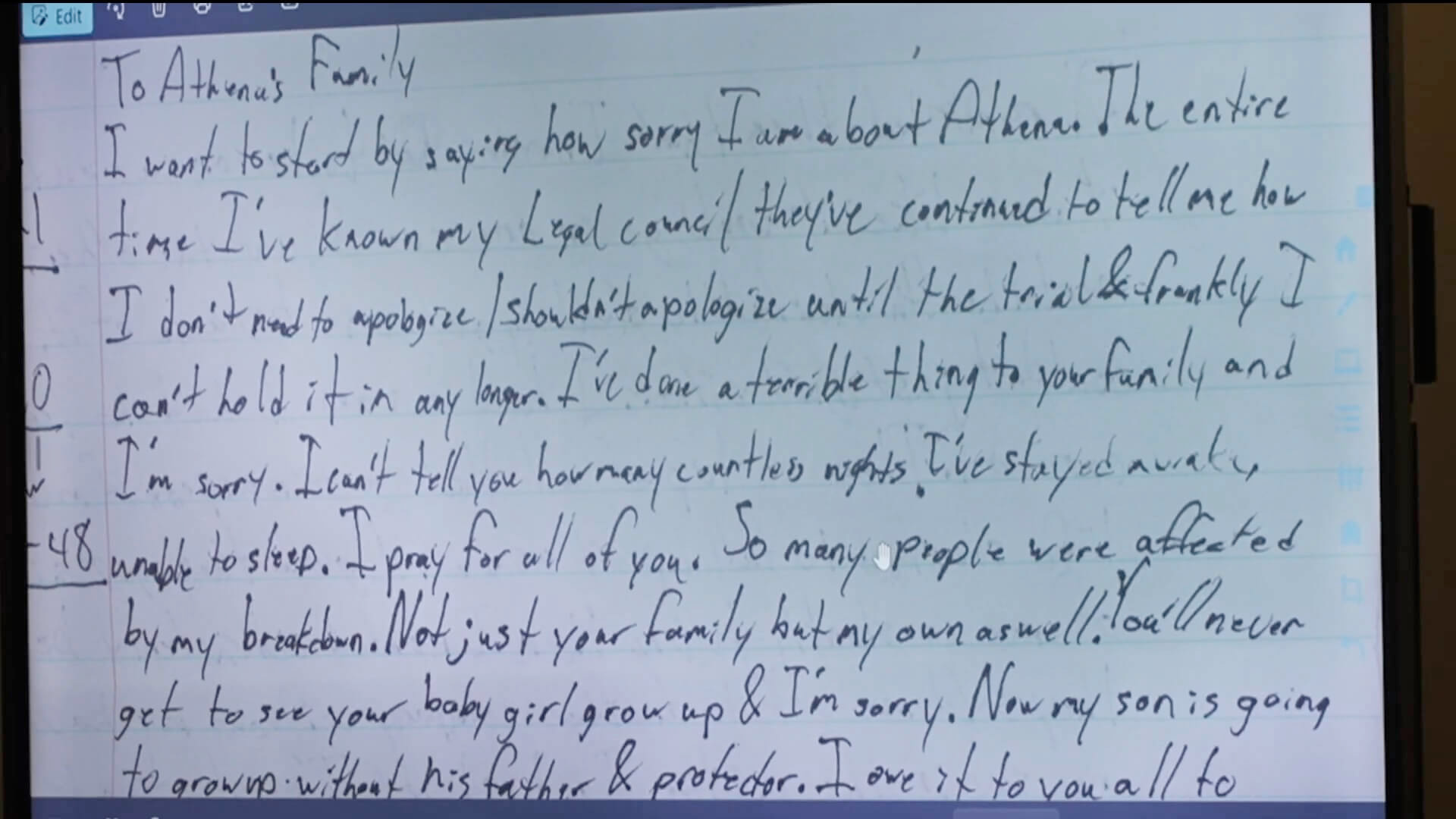
Court exhibit
FORT WORTH, TX — Jurors deciding whether Tanner Horner should be sentenced to death or spend the rest of his life in prison were shown jail letters Monday in which the admitted killer appeared to confess directly to Athena Strand’s family and blame the killing on his deteriorating mental state.
Court TV reported that the letters were introduced during the penalty phase of Horner’s capital murder case after he pleaded guilty to kidnapping and capital murder in the death of 7-year-old Athena Strand just as trial was about to begin, leaving the same jury that would have determined guilt to instead decide whether he should receive a death sentence or life in prison.
Horner, 35, was working for a third-party FedEx contractor when he abducted Athena from her family’s home, according to testimony previously presented in the case. After days of searching, authorities found the child’s body in the water at Bobo’s Crossing.
Sgt. Brett Yarrow testified that investigators found handwritten notes during a search of Horner’s jail cell after his arrest. One of those letters was addressed to Athena’s family and opened with an apology, saying he was sorry for what he had done and could no longer keep it in.
According to court testimony, the letter did not spell out the details of Athena’s death. Instead, Horner wrote that he had Asperger’s syndrome and said he was on the autism spectrum, then described how changes to his delivery route and daily routine allegedly contributed to a breakdown. He told the family he was sorry he had taken their “little angel” away, wrote that they did not deserve what happened, and said he hoped his own death might ease some of their suffering.
The letter also turned to the impact of the killing on Horner’s own family. He wrote that his son did not deserve to lose his father, that his mother did not deserve to lose her son, and that his fiancée did not deserve to lose her wedding day. He asked Athena’s family to remember his son and show him grace and mercy.
Jurors were also shown a second page of handwritten “side notes” that referred to a civil lawsuit filed by the Strand family against FedEx in the wake of Athena’s killing. In those notes, Horner wrote that he hoped the letter would help the family and assist their case against FedEx, which he described as negligent when it came to safety.
Investigators also recovered another letter labeled “DETECTIVES ONLY,” in which Horner claimed he was in danger and tried to shift blame by describing an older man with a rifle who allegedly forced him to take Athena to a designated location after threatening his family. But investigators have said there is no evidence that any other suspect was involved in Athena’s killing.
Chief medical examiner Dr. Jessica Dwyer testified that Athena’s cause of death was blunt force injuries with smothering and strangulation. According to her testimony, the autopsy documented patterned zig-zag, tread-like abrasions and abraded contusions across the child’s face, and she said every part of Athena’s body except her right arm showed injuries.
Jurors have also previously seen Horner’s police interview, in which he said he tried to break Athena’s neck but could not, then used both hands to strangle her before disposing of her body. Prosecutors are seeking the death penalty.
Presumption of Innocence: A presumption of innocence means that any defendant in a criminal trial is presumed to be innocent until they have been proven guilty beyond a reasonable doubt in a court of law. The defendant in this case is only accused of the charges set forth in the criminal complaint. They are innocent until proven guilty.
Editor Picks





Latest Articles




Jail Letters Shown to Jurors Appear to Confess to Athena Strand’s Murder as Tanner Horner Faces Death Penalty
Jurors deciding whether Tanner Horner should live or die were shown jail letters in which he appeared to confess directly to 7-year-old Athena Strand’s family and asked them to forgive him.
By Staff Reports
Published: April 14, 2026 8:00 am ET
Court exhibit
FORT WORTH, TX — Jurors deciding whether Tanner Horner should be sentenced to death or spend the rest of his life in prison were shown jail letters Monday in which the admitted killer appeared to confess directly to Athena Strand’s family and blame the killing on his deteriorating mental state.
Court TV reported that the letters were introduced during the penalty phase of Horner’s capital murder case after he pleaded guilty to kidnapping and capital murder in the death of 7-year-old Athena Strand just as trial was about to begin, leaving the same jury that would have determined guilt to instead decide whether he should receive a death sentence or life in prison.
Horner, 35, was working for a third-party FedEx contractor when he abducted Athena from her family’s home, according to testimony previously presented in the case. After days of searching, authorities found the child’s body in the water at Bobo’s Crossing.
Sgt. Brett Yarrow testified that investigators found handwritten notes during a search of Horner’s jail cell after his arrest. One of those letters was addressed to Athena’s family and opened with an apology, saying he was sorry for what he had done and could no longer keep it in.
According to court testimony, the letter did not spell out the details of Athena’s death. Instead, Horner wrote that he had Asperger’s syndrome and said he was on the autism spectrum, then described how changes to his delivery route and daily routine allegedly contributed to a breakdown. He told the family he was sorry he had taken their “little angel” away, wrote that they did not deserve what happened, and said he hoped his own death might ease some of their suffering.
The letter also turned to the impact of the killing on Horner’s own family. He wrote that his son did not deserve to lose his father, that his mother did not deserve to lose her son, and that his fiancée did not deserve to lose her wedding day. He asked Athena’s family to remember his son and show him grace and mercy.
Jurors were also shown a second page of handwritten “side notes” that referred to a civil lawsuit filed by the Strand family against FedEx in the wake of Athena’s killing. In those notes, Horner wrote that he hoped the letter would help the family and assist their case against FedEx, which he described as negligent when it came to safety.
Investigators also recovered another letter labeled “DETECTIVES ONLY,” in which Horner claimed he was in danger and tried to shift blame by describing an older man with a rifle who allegedly forced him to take Athena to a designated location after threatening his family. But investigators have said there is no evidence that any other suspect was involved in Athena’s killing.
Chief medical examiner Dr. Jessica Dwyer testified that Athena’s cause of death was blunt force injuries with smothering and strangulation. According to her testimony, the autopsy documented patterned zig-zag, tread-like abrasions and abraded contusions across the child’s face, and she said every part of Athena’s body except her right arm showed injuries.
Jurors have also previously seen Horner’s police interview, in which he said he tried to break Athena’s neck but could not, then used both hands to strangle her before disposing of her body. Prosecutors are seeking the death penalty.
Presumption of Innocence: A presumption of innocence means that any defendant in a criminal trial is presumed to be innocent until they have been proven guilty beyond a reasonable doubt in a court of law. The defendant in this case is only accused of the charges set forth in the criminal complaint. They are innocent until proven guilty.
Editor's Note: ThePo makes every effort to accurately transcribe the contents of affidavits of probable cause contained in criminal complaints. Often, the complaints themselves are copies of copies of faxed copies, and are difficult to read. To confirm the accuracy of our transcription, contact the Magisterial District Court listed above and request a copy of the criminal complaint. It's a public record to which you are entitled.
Must Read
Editor Picks
Latest Articles
Jail Letters Shown to Jurors Appear to Confess to Athena Strand’s Murder as Tanner Horner Faces Death Penalty
Jurors deciding whether Tanner Horner should live or die were shown jail letters in which he appeared to confess directly to 7-year-old Athena Strand’s family and asked them to forgive him.
By Staff Reports
Published: April 14, 2026 8:00 am ET
Court exhibit
FORT WORTH, TX — Jurors deciding whether Tanner Horner should be sentenced to death or spend the rest of his life in prison were shown jail letters Monday in which the admitted killer appeared to confess directly to Athena Strand’s family and blame the killing on his deteriorating mental state.
Court TV reported that the letters were introduced during the penalty phase of Horner’s capital murder case after he pleaded guilty to kidnapping and capital murder in the death of 7-year-old Athena Strand just as trial was about to begin, leaving the same jury that would have determined guilt to instead decide whether he should receive a death sentence or life in prison.
Horner, 35, was working for a third-party FedEx contractor when he abducted Athena from her family’s home, according to testimony previously presented in the case. After days of searching, authorities found the child’s body in the water at Bobo’s Crossing.
Sgt. Brett Yarrow testified that investigators found handwritten notes during a search of Horner’s jail cell after his arrest. One of those letters was addressed to Athena’s family and opened with an apology, saying he was sorry for what he had done and could no longer keep it in.
According to court testimony, the letter did not spell out the details of Athena’s death. Instead, Horner wrote that he had Asperger’s syndrome and said he was on the autism spectrum, then described how changes to his delivery route and daily routine allegedly contributed to a breakdown. He told the family he was sorry he had taken their “little angel” away, wrote that they did not deserve what happened, and said he hoped his own death might ease some of their suffering.
The letter also turned to the impact of the killing on Horner’s own family. He wrote that his son did not deserve to lose his father, that his mother did not deserve to lose her son, and that his fiancée did not deserve to lose her wedding day. He asked Athena’s family to remember his son and show him grace and mercy.
Jurors were also shown a second page of handwritten “side notes” that referred to a civil lawsuit filed by the Strand family against FedEx in the wake of Athena’s killing. In those notes, Horner wrote that he hoped the letter would help the family and assist their case against FedEx, which he described as negligent when it came to safety.
Investigators also recovered another letter labeled “DETECTIVES ONLY,” in which Horner claimed he was in danger and tried to shift blame by describing an older man with a rifle who allegedly forced him to take Athena to a designated location after threatening his family. But investigators have said there is no evidence that any other suspect was involved in Athena’s killing.
Chief medical examiner Dr. Jessica Dwyer testified that Athena’s cause of death was blunt force injuries with smothering and strangulation. According to her testimony, the autopsy documented patterned zig-zag, tread-like abrasions and abraded contusions across the child’s face, and she said every part of Athena’s body except her right arm showed injuries.
Jurors have also previously seen Horner’s police interview, in which he said he tried to break Athena’s neck but could not, then used both hands to strangle her before disposing of her body. Prosecutors are seeking the death penalty.
Presumption of Innocence: A presumption of innocence means that any defendant in a criminal trial is presumed to be innocent until they have been proven guilty beyond a reasonable doubt in a court of law. The defendant in this case is only accused of the charges set forth in the criminal complaint. They are innocent until proven guilty.
Editor's Note: ThePo makes every effort to accurately transcribe the contents of affidavits of probable cause contained in criminal complaints. Often, the complaints themselves are copies of copies of faxed copies, and are difficult to read. To confirm the accuracy of our transcription, contact the Magisterial District Court listed above and request a copy of the criminal complaint. It's a public record to which you are entitled.
Must Read
