

Topline: Prosecutors say the Iranian agent tried to hire killers and paid a $5,000 advance before discovering the “hitmen” were actually undercover U.S. law enforcement officers.
Published: March 7, 2026 8:28 am ET

Must Read
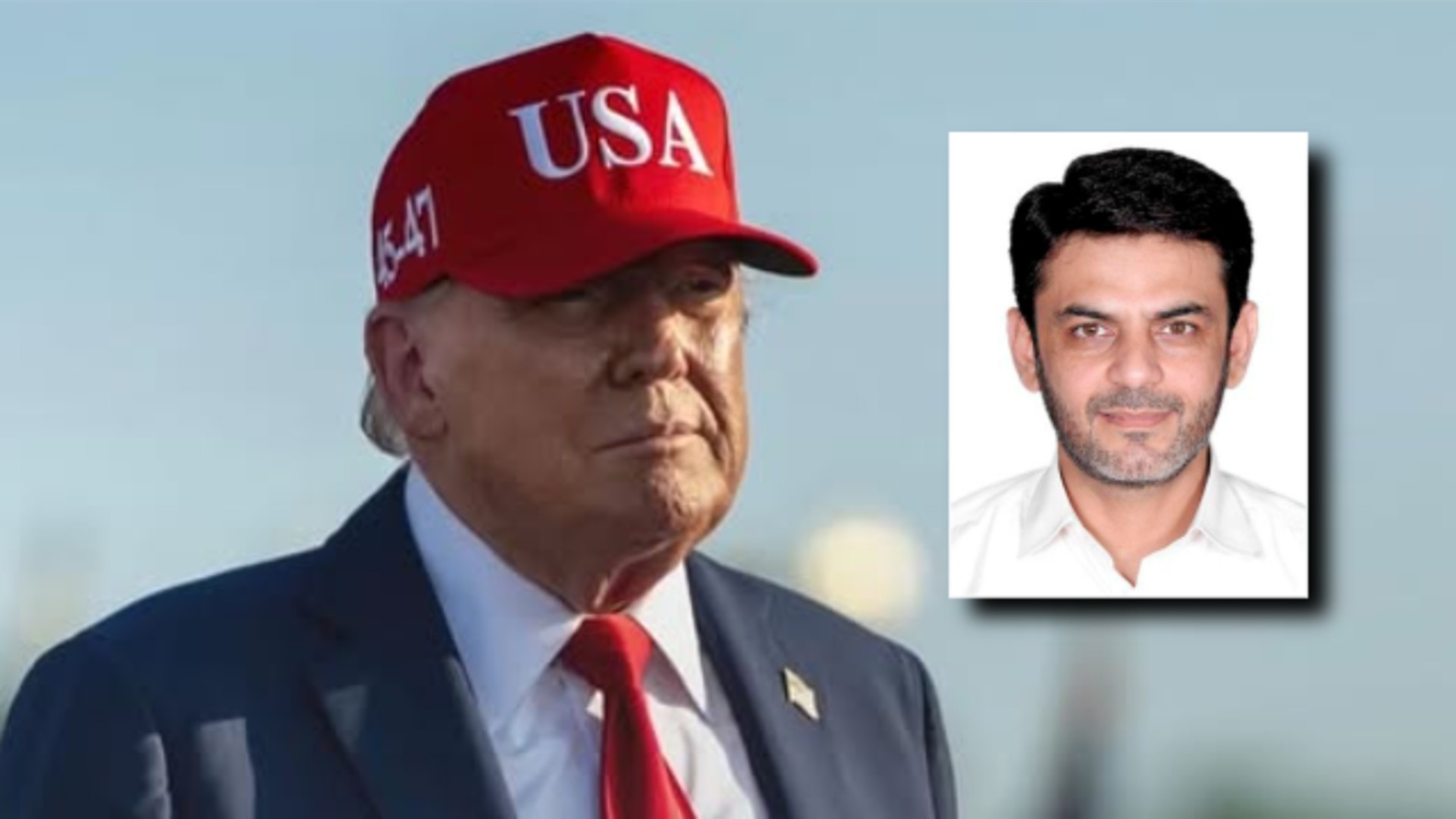
Inset: Asif Merchant (U.S. Department of Justice; background Donald Trump via Instagram)
BROOKLYN, NY — A federal jury has convicted an alleged Iranian intelligence operative who prosecutors say traveled to the United States with orders to recruit criminals, stage protests and ultimately arrange the assassination of American political figures, including President Donald Trump.
Asif Merchant, also known as “Asif Raza Merchant,” was found guilty Friday of murder for hire and attempting to commit an act of terrorism transcending national boundaries, according to the U.S. Department of Justice. Merchant, whom authorities described as a trained operative of Iran’s Islamic Revolutionary Guard Corps (IRGC), now faces up to life in prison.
Prosecutors said Merchant arrived in the United States in April 2024 on a mission directed by the IRGC, Iran’s elite military force that the U.S. government has designated as a terrorist organization. At trial, Merchant admitted the group had sent him to the country to arrange political assassinations and steal sensitive documents, according to the Justice Department.
The alleged plot never progressed beyond planning stages because the people Merchant believed he was recruiting turned out to be cooperating with federal investigators or undercover law enforcement agents.
“This man landed on American soil hoping to kill President Trump. Instead, he was met with the might of American law enforcement,” Attorney General Pamela Bondi said in a statement released by the Justice Department. “The Department of Justice will remain ever-vigilant to protect Americans, prosecute terrorists, and halt acts of terrorism before they happen.”
According to prosecutors, Merchant began working for the IRGC while in Pakistan in late 2022 or early 2023, receiving training in espionage tradecraft that included countersurveillance techniques. He later traveled repeatedly to Iran to meet with a handler before being sent to the United States to identify potential recruits who could remain in the country to assist the Iranian government.
Merchant testified he knew the IRGC was a designated terrorist organization.
By 2024, prosecutors said, his assignment had escalated. Merchant was sent back to the United States with instructions to recruit what he described as “Mafia” members to carry out multiple operations, stealing documents or USB drives from a target’s home, organizing protests at political rallies and arranging the murder of a U.S. politician or government official.
Instead of finding criminal accomplices, however, Merchant unwittingly set off a federal investigation.
According to the Justice Department, Merchant contacted an acquaintance in New York named Nadeem Ali whom he believed could help him execute the plan. Ali instead alerted law enforcement and began cooperating as a confidential source.
In early June 2024, Merchant met with Ali in New York and outlined the scheme. During the conversation, prosecutors said, Merchant made a “finger gun” gesture to signal that the job involved killing someone.
Merchant also told Ali that the intended victims would be “targeted here” in the United States and began quizzing him about possible methods for carrying out the assassination.
At one point, according to prosecutors, Merchant asked how a target might be killed in various scenarios while noting there would be “security [] all around” the person.
Authorities said Merchant planned to leave the country before the killing occurred and communicate with his accomplices using coded language. When Ali asked whether Merchant had consulted the “party” directing the operation, Merchant said he had and that the person instructed him to “finalize” the plan before departing the United States, a reference Merchant later testified meant his IRGC handler.
By mid-June, Merchant believed he had found the hired killers.
Prosecutors said he met in New York with two men he thought were hitmen but who were actually undercover U.S. law enforcement officers. During that meeting, Merchant told them he needed three services: stealing documents, arranging protests at political rallies and killing what he described as a “political person.”
The operatives would not learn the target’s identity until after Merchant left the United States, he told them.
Throughout the planning process, investigators said Merchant conducted internet searches for the locations of political rallies and sent reports about security measures back to his handler in Iran.
He also began arranging an advance payment for the killing.
With help from an associate overseas, Merchant obtained $5,000 in cash and met with the undercover officers on June 21, 2024, to hand over the money, prosecutors said.
After the payment was made, one of the undercover agents remarked, “now we’re bonded,” according to trial testimony.
Merchant replied, “yes.”
The agent then said, “Now we know we’re going forward. We’re doing this,” to which Merchant responded, “Yes, absolutely.”
Authorities said Merchant believed the plan was moving ahead as he prepared to leave the United States.
He booked a flight out of the country for July 12, 2024.
Instead, federal agents arrested him that same day before he could depart.
“Merchant tried to hire someone to kill a politician or a U.S. government official, but the FBI and our partners stopped that deadly plot,” FBI Director Kash Patel said in a statement. “This was not the first attempt by Iran to harm our citizens on U.S. soil; the other efforts also failed. Let this verdict serve as a reminder that the FBI is committed to detecting such threats and preventing acts of violence, and we will hold accountable anyone who tries to interfere with our democratic system.”
Assistant Attorney General for National Security John A. Eisenberg said the alleged plan represented a direct threat to the nation’s political system.
“Merchant, a trained Islamic Revolutionary Guard Corps operative, entered the United States intending to commit acts of terror, and ultimately, to facilitate the assassination of U.S. government officials, including President Trump,” Eisenberg said. “Merchant’s plot struck at the heart of our democracy and our commitment to the rule of law. NSD remains committed to defending our Nation from the pernicious threat of terrorism.”
U.S. Attorney John Nocella for the Eastern District of New York also emphasized the role of investigators in disrupting the scheme before any violence could occur.
“Iran’s terrorist regime sent Asif Merchant here to sow mayhem and murder,” Nocella said. “Thanks to the vigilance of our law enforcement partners, his scheme ended in failure. Today, with Merchant’s conviction, that failure is complete. This Office will always remain vigilant in our mission to protect the United States from foreign terrorist adversaries.”
Presumption of Innocence: A presumption of innocence means that any defendant in a criminal trial is presumed to be innocent until they have been proven guilty beyond a reasonable doubt in a court of law. The defendant in this case is only accused of the charges set forth in the criminal complaint. They are innocent until proven guilty.
Editor Picks





Latest Articles




Iranian Spy’s Plot to Assassinate Trump Foiled by Undercover Agents, Jury Finds
Prosecutors say the Iranian agent tried to hire killers and paid a $5,000 advance before discovering the “hitmen” were actually undercover U.S. law enforcement officers.
By Jacob Charles
Published: March 7, 2026 8:28 am ET
Inset: Asif Merchant (U.S. Department of Justice; background Donald Trump via Instagram)
BROOKLYN, NY — A federal jury has convicted an alleged Iranian intelligence operative who prosecutors say traveled to the United States with orders to recruit criminals, stage protests and ultimately arrange the assassination of American political figures, including President Donald Trump.
Asif Merchant, also known as “Asif Raza Merchant,” was found guilty Friday of murder for hire and attempting to commit an act of terrorism transcending national boundaries, according to the U.S. Department of Justice. Merchant, whom authorities described as a trained operative of Iran’s Islamic Revolutionary Guard Corps (IRGC), now faces up to life in prison.
Prosecutors said Merchant arrived in the United States in April 2024 on a mission directed by the IRGC, Iran’s elite military force that the U.S. government has designated as a terrorist organization. At trial, Merchant admitted the group had sent him to the country to arrange political assassinations and steal sensitive documents, according to the Justice Department.
The alleged plot never progressed beyond planning stages because the people Merchant believed he was recruiting turned out to be cooperating with federal investigators or undercover law enforcement agents.
“This man landed on American soil hoping to kill President Trump. Instead, he was met with the might of American law enforcement,” Attorney General Pamela Bondi said in a statement released by the Justice Department. “The Department of Justice will remain ever-vigilant to protect Americans, prosecute terrorists, and halt acts of terrorism before they happen.”
According to prosecutors, Merchant began working for the IRGC while in Pakistan in late 2022 or early 2023, receiving training in espionage tradecraft that included countersurveillance techniques. He later traveled repeatedly to Iran to meet with a handler before being sent to the United States to identify potential recruits who could remain in the country to assist the Iranian government.
Merchant testified he knew the IRGC was a designated terrorist organization.
By 2024, prosecutors said, his assignment had escalated. Merchant was sent back to the United States with instructions to recruit what he described as “Mafia” members to carry out multiple operations, stealing documents or USB drives from a target’s home, organizing protests at political rallies and arranging the murder of a U.S. politician or government official.
Instead of finding criminal accomplices, however, Merchant unwittingly set off a federal investigation.
According to the Justice Department, Merchant contacted an acquaintance in New York named Nadeem Ali whom he believed could help him execute the plan. Ali instead alerted law enforcement and began cooperating as a confidential source.
In early June 2024, Merchant met with Ali in New York and outlined the scheme. During the conversation, prosecutors said, Merchant made a “finger gun” gesture to signal that the job involved killing someone.
Merchant also told Ali that the intended victims would be “targeted here” in the United States and began quizzing him about possible methods for carrying out the assassination.
At one point, according to prosecutors, Merchant asked how a target might be killed in various scenarios while noting there would be “security [] all around” the person.
Authorities said Merchant planned to leave the country before the killing occurred and communicate with his accomplices using coded language. When Ali asked whether Merchant had consulted the “party” directing the operation, Merchant said he had and that the person instructed him to “finalize” the plan before departing the United States, a reference Merchant later testified meant his IRGC handler.
By mid-June, Merchant believed he had found the hired killers.
Prosecutors said he met in New York with two men he thought were hitmen but who were actually undercover U.S. law enforcement officers. During that meeting, Merchant told them he needed three services: stealing documents, arranging protests at political rallies and killing what he described as a “political person.”
The operatives would not learn the target’s identity until after Merchant left the United States, he told them.
Throughout the planning process, investigators said Merchant conducted internet searches for the locations of political rallies and sent reports about security measures back to his handler in Iran.
He also began arranging an advance payment for the killing.
With help from an associate overseas, Merchant obtained $5,000 in cash and met with the undercover officers on June 21, 2024, to hand over the money, prosecutors said.
After the payment was made, one of the undercover agents remarked, “now we’re bonded,” according to trial testimony.
Merchant replied, “yes.”
The agent then said, “Now we know we’re going forward. We’re doing this,” to which Merchant responded, “Yes, absolutely.”
Authorities said Merchant believed the plan was moving ahead as he prepared to leave the United States.
He booked a flight out of the country for July 12, 2024.
Instead, federal agents arrested him that same day before he could depart.
“Merchant tried to hire someone to kill a politician or a U.S. government official, but the FBI and our partners stopped that deadly plot,” FBI Director Kash Patel said in a statement. “This was not the first attempt by Iran to harm our citizens on U.S. soil; the other efforts also failed. Let this verdict serve as a reminder that the FBI is committed to detecting such threats and preventing acts of violence, and we will hold accountable anyone who tries to interfere with our democratic system.”
Assistant Attorney General for National Security John A. Eisenberg said the alleged plan represented a direct threat to the nation’s political system.
“Merchant, a trained Islamic Revolutionary Guard Corps operative, entered the United States intending to commit acts of terror, and ultimately, to facilitate the assassination of U.S. government officials, including President Trump,” Eisenberg said. “Merchant’s plot struck at the heart of our democracy and our commitment to the rule of law. NSD remains committed to defending our Nation from the pernicious threat of terrorism.”
U.S. Attorney John Nocella for the Eastern District of New York also emphasized the role of investigators in disrupting the scheme before any violence could occur.
“Iran’s terrorist regime sent Asif Merchant here to sow mayhem and murder,” Nocella said. “Thanks to the vigilance of our law enforcement partners, his scheme ended in failure. Today, with Merchant’s conviction, that failure is complete. This Office will always remain vigilant in our mission to protect the United States from foreign terrorist adversaries.”
Presumption of Innocence: A presumption of innocence means that any defendant in a criminal trial is presumed to be innocent until they have been proven guilty beyond a reasonable doubt in a court of law. The defendant in this case is only accused of the charges set forth in the criminal complaint. They are innocent until proven guilty.
Editor's Note: ThePo makes every effort to accurately transcribe the contents of affidavits of probable cause contained in criminal complaints. Often, the complaints themselves are copies of copies of faxed copies, and are difficult to read. To confirm the accuracy of our transcription, contact the Magisterial District Court listed above and request a copy of the criminal complaint. It's a public record to which you are entitled.
Must Read
Editor Picks
Latest Articles
Iranian Spy’s Plot to Assassinate Trump Foiled by Undercover Agents, Jury Finds
Prosecutors say the Iranian agent tried to hire killers and paid a $5,000 advance before discovering the “hitmen” were actually undercover U.S. law enforcement officers.
By Jacob Charles
Published: March 7, 2026 8:28 am ET
Inset: Asif Merchant (U.S. Department of Justice; background Donald Trump via Instagram)
BROOKLYN, NY — A federal jury has convicted an alleged Iranian intelligence operative who prosecutors say traveled to the United States with orders to recruit criminals, stage protests and ultimately arrange the assassination of American political figures, including President Donald Trump.
Asif Merchant, also known as “Asif Raza Merchant,” was found guilty Friday of murder for hire and attempting to commit an act of terrorism transcending national boundaries, according to the U.S. Department of Justice. Merchant, whom authorities described as a trained operative of Iran’s Islamic Revolutionary Guard Corps (IRGC), now faces up to life in prison.
Prosecutors said Merchant arrived in the United States in April 2024 on a mission directed by the IRGC, Iran’s elite military force that the U.S. government has designated as a terrorist organization. At trial, Merchant admitted the group had sent him to the country to arrange political assassinations and steal sensitive documents, according to the Justice Department.
The alleged plot never progressed beyond planning stages because the people Merchant believed he was recruiting turned out to be cooperating with federal investigators or undercover law enforcement agents.
“This man landed on American soil hoping to kill President Trump. Instead, he was met with the might of American law enforcement,” Attorney General Pamela Bondi said in a statement released by the Justice Department. “The Department of Justice will remain ever-vigilant to protect Americans, prosecute terrorists, and halt acts of terrorism before they happen.”
According to prosecutors, Merchant began working for the IRGC while in Pakistan in late 2022 or early 2023, receiving training in espionage tradecraft that included countersurveillance techniques. He later traveled repeatedly to Iran to meet with a handler before being sent to the United States to identify potential recruits who could remain in the country to assist the Iranian government.
Merchant testified he knew the IRGC was a designated terrorist organization.
By 2024, prosecutors said, his assignment had escalated. Merchant was sent back to the United States with instructions to recruit what he described as “Mafia” members to carry out multiple operations, stealing documents or USB drives from a target’s home, organizing protests at political rallies and arranging the murder of a U.S. politician or government official.
Instead of finding criminal accomplices, however, Merchant unwittingly set off a federal investigation.
According to the Justice Department, Merchant contacted an acquaintance in New York named Nadeem Ali whom he believed could help him execute the plan. Ali instead alerted law enforcement and began cooperating as a confidential source.
In early June 2024, Merchant met with Ali in New York and outlined the scheme. During the conversation, prosecutors said, Merchant made a “finger gun” gesture to signal that the job involved killing someone.
Merchant also told Ali that the intended victims would be “targeted here” in the United States and began quizzing him about possible methods for carrying out the assassination.
At one point, according to prosecutors, Merchant asked how a target might be killed in various scenarios while noting there would be “security [] all around” the person.
Authorities said Merchant planned to leave the country before the killing occurred and communicate with his accomplices using coded language. When Ali asked whether Merchant had consulted the “party” directing the operation, Merchant said he had and that the person instructed him to “finalize” the plan before departing the United States, a reference Merchant later testified meant his IRGC handler.
By mid-June, Merchant believed he had found the hired killers.
Prosecutors said he met in New York with two men he thought were hitmen but who were actually undercover U.S. law enforcement officers. During that meeting, Merchant told them he needed three services: stealing documents, arranging protests at political rallies and killing what he described as a “political person.”
The operatives would not learn the target’s identity until after Merchant left the United States, he told them.
Throughout the planning process, investigators said Merchant conducted internet searches for the locations of political rallies and sent reports about security measures back to his handler in Iran.
He also began arranging an advance payment for the killing.
With help from an associate overseas, Merchant obtained $5,000 in cash and met with the undercover officers on June 21, 2024, to hand over the money, prosecutors said.
After the payment was made, one of the undercover agents remarked, “now we’re bonded,” according to trial testimony.
Merchant replied, “yes.”
The agent then said, “Now we know we’re going forward. We’re doing this,” to which Merchant responded, “Yes, absolutely.”
Authorities said Merchant believed the plan was moving ahead as he prepared to leave the United States.
He booked a flight out of the country for July 12, 2024.
Instead, federal agents arrested him that same day before he could depart.
“Merchant tried to hire someone to kill a politician or a U.S. government official, but the FBI and our partners stopped that deadly plot,” FBI Director Kash Patel said in a statement. “This was not the first attempt by Iran to harm our citizens on U.S. soil; the other efforts also failed. Let this verdict serve as a reminder that the FBI is committed to detecting such threats and preventing acts of violence, and we will hold accountable anyone who tries to interfere with our democratic system.”
Assistant Attorney General for National Security John A. Eisenberg said the alleged plan represented a direct threat to the nation’s political system.
“Merchant, a trained Islamic Revolutionary Guard Corps operative, entered the United States intending to commit acts of terror, and ultimately, to facilitate the assassination of U.S. government officials, including President Trump,” Eisenberg said. “Merchant’s plot struck at the heart of our democracy and our commitment to the rule of law. NSD remains committed to defending our Nation from the pernicious threat of terrorism.”
U.S. Attorney John Nocella for the Eastern District of New York also emphasized the role of investigators in disrupting the scheme before any violence could occur.
“Iran’s terrorist regime sent Asif Merchant here to sow mayhem and murder,” Nocella said. “Thanks to the vigilance of our law enforcement partners, his scheme ended in failure. Today, with Merchant’s conviction, that failure is complete. This Office will always remain vigilant in our mission to protect the United States from foreign terrorist adversaries.”
Presumption of Innocence: A presumption of innocence means that any defendant in a criminal trial is presumed to be innocent until they have been proven guilty beyond a reasonable doubt in a court of law. The defendant in this case is only accused of the charges set forth in the criminal complaint. They are innocent until proven guilty.
Editor's Note: ThePo makes every effort to accurately transcribe the contents of affidavits of probable cause contained in criminal complaints. Often, the complaints themselves are copies of copies of faxed copies, and are difficult to read. To confirm the accuracy of our transcription, contact the Magisterial District Court listed above and request a copy of the criminal complaint. It's a public record to which you are entitled.
Must Read
